
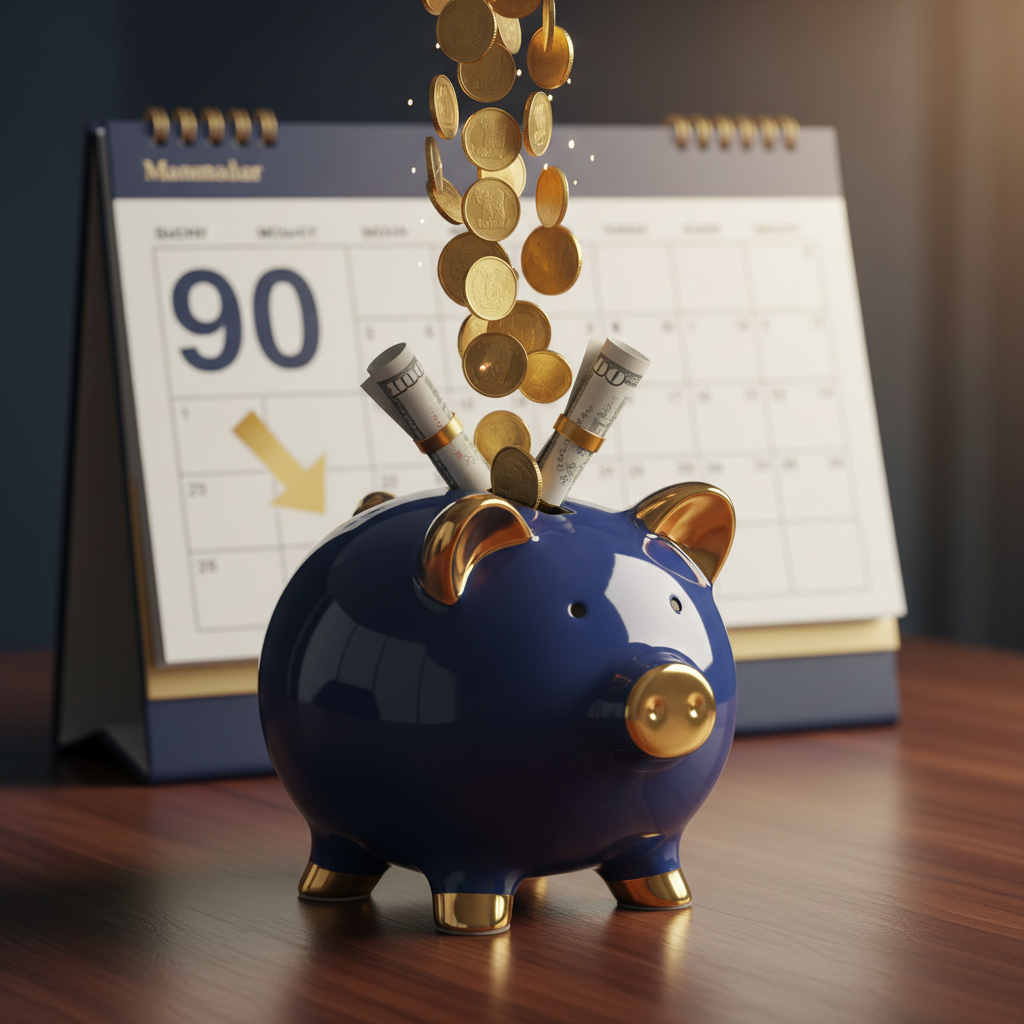
Life is full of surprises, and not all of them are pleasant. An unexpected car repair, a sudden dental bill, or a leaky roof can throw even the most carefully planned budget into chaos. Without a safety net, these minor bumps can quickly turn into major financial stress, often leading to high-interest credit card debt. This is where an emergency fund comes in. It's a simple, powerful tool that provides a buffer between you and the unexpected. This article will guide you through the process of building your first, crucial layer of financial security: a $1,000 starter emergency fund.
Why a $1,000 Starter Fund is Your First Goal
Financial experts, including those at the Consumer Financial Protection Bureau (CFPB), often recommend saving an amount equal to three to six months of living expenses. While this is an excellent long-term goal, it can feel overwhelming and out of reach when you're just starting out. Seeing a target of $15,000 or $20,000 can be so discouraging that it prevents you from even beginning.
That's why a $1,000 starter emergency fund is such a powerful first step. It's a concrete, achievable goal that can make a huge difference. A thousand dollars is enough to cover many of life's common, smaller emergencies. Think about it: a new set of tires, a visit to an urgent care clinic, a plumbing repair, or replacing a broken appliance. Having $1,000 in cash prevents these issues from forcing you to swipe a credit card and fall into a debt cycle. It's a psychological win that builds momentum and confidence, proving that you can take control of your finances.
5 Tactics to Find Your First $1,000 Fast
Saving $1,000 might seem daunting, but if you give yourself a 60 or 90-day timeline, it becomes much more manageable. Saving $1,000 in 90 days breaks down to just over $11 per day. In 60 days, it's about $16.67 per day. By combining a few strategies, you can hit this target without completely overhauling your life. Here are five specific tactics to get you there.
1. The "Sell-It" Strategy
Most of us have value hiding in our closets, basements, and garages. Spend a weekend gathering items you no longer use: old electronics, clothes that don't fit, unused sports equipment, books, or furniture. You can use online platforms like Facebook Marketplace, Poshmark, or eBay to reach a wide audience. For a quicker turnaround, consider local consignment shops for clothing or electronics. A well-organized garage sale can also bring in a few hundred dollars and help you declutter at the same time.
2. Launch a Quick Side Gig
The gig economy offers countless flexible ways to earn extra money on your own schedule. The key is to choose something with a low barrier to entry. Food delivery services, pet-sitting or dog-walking through apps like Rover, or performing small tasks on platforms like TaskRabbit can start generating cash almost immediately. If you have a specific skill, you can offer freelance services on sites like Upwork or Fiverr. Even a few hours a week dedicated to a side gig can significantly accelerate your savings.
3. Conduct an Aggressive Expense Audit
This tactic is about finding money you already have but are spending unconsciously. Print out your last 60 days of bank and credit card statements and go through them line by line with a highlighter. Separate your spending into three categories: essential needs (rent, utilities, groceries), wants (dining out, entertainment), and recurring subscriptions. Challenge yourself to temporarily cut or pause three to five "wants" or subscriptions for the next two months. This could mean canceling streaming services you rarely watch, brewing coffee at home instead of buying it, or pausing a gym membership you aren't using. The savings can be surprisingly substantial.
4. Capture Your Windfalls
A windfall is any unexpected money that comes your way. Common examples include a tax refund, a work bonus, a cash gift for a birthday, or a rebate check. The natural temptation is to see this as "fun money" and spend it. To build your emergency fund, you need to make a pre-commitment. Decide now that any windfall you receive over the next three months will go directly and immediately into your savings. By having a plan for the money before it even arrives, you can bypass temptation and instantly boost your fund.
5. Take a No-Spend Challenge
A no-spend challenge is a short-term, intense savings sprint. You can do it for a week or even a full month. The rules are simple: you only spend money on absolute necessities. This typically includes your rent or mortgage, utilities, essential groceries (no pre-made food or snacks), and gas to get to work. All other spending—on clothes, entertainment, coffee, restaurants, hobbies—is frozen. At the end of the challenge period, calculate how much you would have normally spent and transfer that entire amount into your emergency fund.
Where to Keep Your Emergency Fund
The right location for your emergency fund is critical. It needs to be liquid (easy to access) but not too easy to access, as you don't want to dip into it for non-emergencies. Here are the main options:
- High-Yield Savings Account (HYSA): This is the most recommended option. HYSAs are online-based accounts that offer significantly higher interest rates than traditional brick-and-mortar banks. Your money is safe, it grows faster, and it's typically separate from your primary checking account. This separation creates a helpful "friction" layer, as transfers can take 1-3 business days, making you pause and think before using the money.
- Traditional Savings or Checking Account: Keeping the money at your primary bank is convenient, as you can access it instantly. However, the interest rates are typically very low, meaning your money loses purchasing power to inflation over time. It is also very easy to accidentally spend, as a quick transfer can move it into your debit account.
- Cash: While having some physical cash on hand can feel secure, it's not a good place for your entire $1,000. Cash is vulnerable to theft, loss, or damage and earns zero interest. A common approach is to keep the majority of your fund in an HYSA and perhaps a small portion, like $100-$200, in a secure place at home for immediate crisis use.
What Counts as a True Emergency?
Building the fund is only half the battle; protecting it is just as important. An emergency fund is not a slush fund for sales, vacations, or holiday gifts. Using it for non-emergencies will undo all your hard work. A true emergency can be defined by three criteria. It must be:
- Unexpected: A recurring annual car registration fee is not an emergency; a sudden transmission failure is.
- Urgent: A desire to buy a new laptop is not urgent; needing to replace a broken one required for your job is.
- Necessary: A great deal on plane tickets is not necessary; traveling to help a sick family member is.
Common examples of valid emergencies include a job loss, an unexpected medical or dental bill, an essential home repair (like a broken furnace in winter), or a critical car repair when you have no other means of transportation.
Next Steps: Graduate to a 3-6 Month Fund
Congratulations! Once you've saved your first $1,000, take a moment to celebrate this major accomplishment. You've created a vital financial cushion. Now, your next goal is to expand this into a full emergency fund that covers 3 to 6 months of essential living expenses.
To do this, first calculate your essential monthly expenses. Add up your rent or mortgage, utilities, food, transportation, insurance premiums, and minimum debt payments. This is the bare-bones amount you need to survive each month. Multiply that number by three to six. Aim for three months if you have a stable, dual-income household. Aim for six months if you are self-employed, work on commission, or have a single or less stable source of income. Don't let the large number intimidate you. The best way to reach this goal is to automate it. Set up a recurring automatic transfer from your checking account to your HYSA each payday. Even $25 or $50 a week adds up consistently over time, building your financial security on autopilot.